What ABW actually is
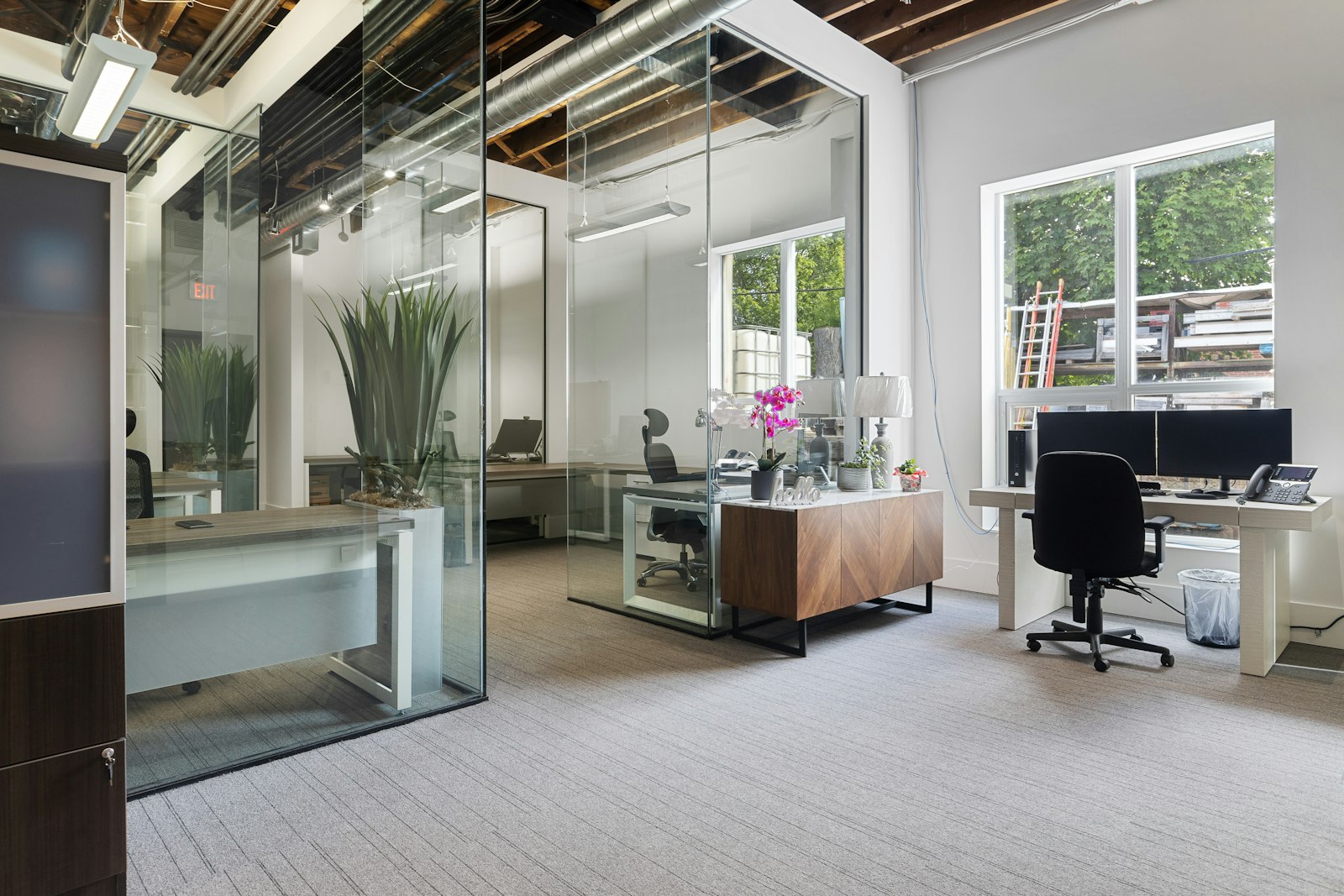
Activity-based working rests on a simple idea. Instead of each person owning one desk where they do everything, people choose a setting suited to what they are doing at the time: a quiet room for focused writing, a team table for planning, a booth for a call, a lounge for an informal conversation. The office becomes a range of places rather than a grid of identical desks.
The furniture is the visible part, and so it is often mistaken for the whole. A floor full of lounge chairs, phone booths and long tables is not an ABW office if everyone still arrives, claims the same seat and stays there all day. What makes it work is behaviour: people moving through the day, leaving settings free for others, and trusting that a suitable place will be available when they need it. That behaviour is an operating model, and it needs to be designed as carefully as the space.
When it suits, and when it does not
ABW suits organisations where work is varied, where people are often away from their desks, and where attendance varies through the week. Consulting firms, technology teams with hybrid schedules and companies with many people in meetings or at client sites are typical candidates.
It suits less well where work is uniform and stationary. A support centre where people work in fixed shifts with specialised equipment, an accounts team handling large volumes of paper or a design studio relying on large, calibrated screens may gain little from moving around. Roles requiring specialised equipment are better given dedicated seats.
An honest test is to look at how the current office is used. If desks are occupied most of the day by the same person doing one kind of task, ABW will create friction without much benefit. If desks are often empty while meeting rooms are overbooked and people take calls in corridors, the case is stronger.
Neighbourhoods give people an anchor
A common objection is that ABW leaves people rootless, searching for a seat every morning and never sure where their team is. The answer is the neighbourhood: a defined area of the floor, with a mix of settings, that belongs to a team or group of related teams.
Within the neighbourhood, nobody owns a desk, but everybody knows where to go. Team storage, a shared pinboard, a meeting table and the lockers sit there. Colleagues can find each other without a booking system. The rest of the floor, with its shared rooms, focus areas and social spaces, remains open to everyone.
Size neighbourhoods to typical attendance rather than full headcount, but with some margin for the busiest day. Watching real occupancy for several weeks, including around festivals and month-end, gives a more reliable picture than a planning ratio.
Lockers and the clear desk
Without a personal desk, people need somewhere to keep their belongings. Lockers are essential, and they should be close to each neighbourhood, sized for a laptop bag, a lunch box and a change of shoes in the monsoon. Electronic locks avoid lost keys and allow lockers to be assigned or shared as needed.
The clear-desk protocol follows. At the end of the day, or when leaving a setting for more than a short period, people take their things with them. This is what allows the next person to use the desk, and what allows housekeeping to clean properly. It needs to be agreed openly, practised by leadership and supported with places to put things down. A protocol without lockers will simply fail.
Booking without bureaucracy
Some settings work best booked in advance, such as meeting rooms, project rooms and perhaps a proportion of desks on busy days. Others work best on a first-come basis. A booking system should make the first group easy to reserve and release automatically when unused, while leaving the second group alone.
Resist the temptation to put every chair into the system. Over-booking creates its own problems: people reserve desks they do not use, and others cannot find one. Start with rooms, observe, and extend booking only where a shortage appears.
The change work is the real project
ABW changes habits people have held for years, including the sense that a desk is a sign of belonging or status. Treating the move as an interior project and leaving the rest to chance is the most reliable way to make it fail.
The change work usually includes:
- Explaining the reasons honestly, including any space savings, alongside the benefits for people.
- Involving each team in defining its neighbourhood and its shared rules.
- Asking leaders to give up their own fixed seats where appropriate.
- Offering a walk-through of the new floor and a short guide to the settings.
- Collecting feedback after a few weeks and adjusting the space and the rules.
Pilot it on one floor
The safest way to introduce ABW is to try it with one or two willing teams before committing the whole organisation. Choose a floor or a part of a floor, furnish it with a realistic mix of settings, and run it for a period long enough to include ordinary weeks and busy ones.
Measure what happens: occupancy of each setting, the availability of rooms and booths, what people use and avoid, and what they say. Then adjust before the wider rollout. A pilot is the point at which an operating model becomes a design brief, and it is the stage at which we prefer to be involved.